
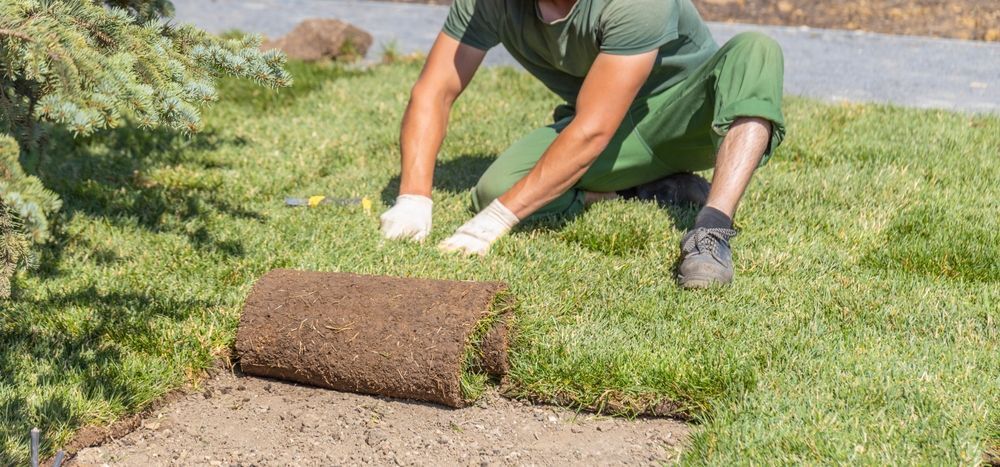
Finished Lawns Ready for Immediate Use
Yard Installation and Sod Services in Murray for residential and commercial properties that need a stable, usable lawn surface after construction or major earthwork
After excavation, grading, or construction wraps up, the ground left behind is typically compacted, uneven, and missing the topsoil layer that grass actually needs to root and survive. Gingles Excavating provides yard installation and sod services in Murray as the finishing phase that turns a worked-over site into a functional lawn—covering ground preparation, topsoil placement where the existing surface is unsuitable, final shaping to establish positive drainage, and sod installation that produces a usable surface without the germination window that seeding requires. Properties that skip proper ground preparation before sod installation often end up with turf that establishes unevenly, develops bare patches within a season, or holds water in low spots that weren't corrected before the grass went down.
The preparation stage is where the quality of the finished lawn is determined. Final shaping establishes the grade that directs surface water away from structures and toward appropriate drainage outlets, which is a functional concern as much as an aesthetic one. Topsoil is spread to an appropriate depth across areas where subgrade material was exposed during construction—in western Kentucky's clay-heavy soils, adding a workable topsoil layer makes the difference between sod that roots within weeks and sod that struggles and thins out because roots can't penetrate compacted subsoil effectively.
Request an estimate based on your site's current condition and the square footage that needs to be graded, topped, and sodded.
The Difference Between Prepared and Unprepared Sod Installation
Sod installation starts with verifying that the finished grade is smooth enough to lay flat without gaps, consistent enough to allow uniform rooting depth, and correctly sloped to shed surface water. Gingles Excavating completes final shaping passes before any sod is placed, which closes low spots where water would pool beneath the turf and cause rot at the root level. The sod itself is laid in staggered rows with tight seams to prevent separation during the initial rooting period when the turf is most vulnerable to movement.
Once the sod is down and the installation is complete, the property transitions from a bare construction site to a finished lawn in a single day—a visible, immediate change that seeding cannot replicate. Edges are defined, grade transitions are smooth, and the surface is firm enough to walk without disturbing the newly placed turf.
This service connects directly to new construction projects, post-excavation recovery, and demolition site restoration where the final landscaping step has been deferred until structural work is finished. The scope of preparation work varies depending on whether the site has adequate topsoil already in place or whether the construction process stripped it down to compacted subgrade, and an on-site review identifies which conditions apply before any material is ordered.
Questions Before Starting Your Yard Project
Property owners completing construction projects or recovering from major site work in Murray often ask these questions when evaluating yard installation and whether their site is ready for sod.
How much topsoil is needed before sod can be installed?
The target depth depends on what's already present—areas with exposed clay subgrade typically need a minimum of four inches of quality topsoil to support healthy root development, while areas with partially intact native soil may need less correction.
Why does final grading matter before sod is placed?
Grade irregularities beneath sod trap water at the root zone, promote disease, and create uneven settling that leaves the finished lawn bumpy and difficult to mow after the turf establishes.
What site conditions make sod a better choice than seeding?
Sod is appropriate when erosion is a concern on sloped areas, when a finished appearance is needed quickly, or when the installation season falls outside optimal germination windows for seeded grass varieties.
How does clay soil in western Kentucky affect sod establishment?
Dense clay limits root penetration and slows drainage at the surface, which is why adding a topsoil layer above the subgrade is a standard step in this region rather than an optional upgrade.
What preparation is already done if excavation was handled on the same project?
Sites where excavation and rough grading are already complete generally need only final shaping, topsoil placement in stripped areas, and surface smoothing before sod installation can proceed—skipping back to earlier earthwork phases is rarely necessary.
Gingles Excavating handles both the preparation and the sod installation as a single coordinated scope of work—call (270) 227-8956 to discuss your site's current condition and get an accurate picture of what the finished yard installation will involve.