
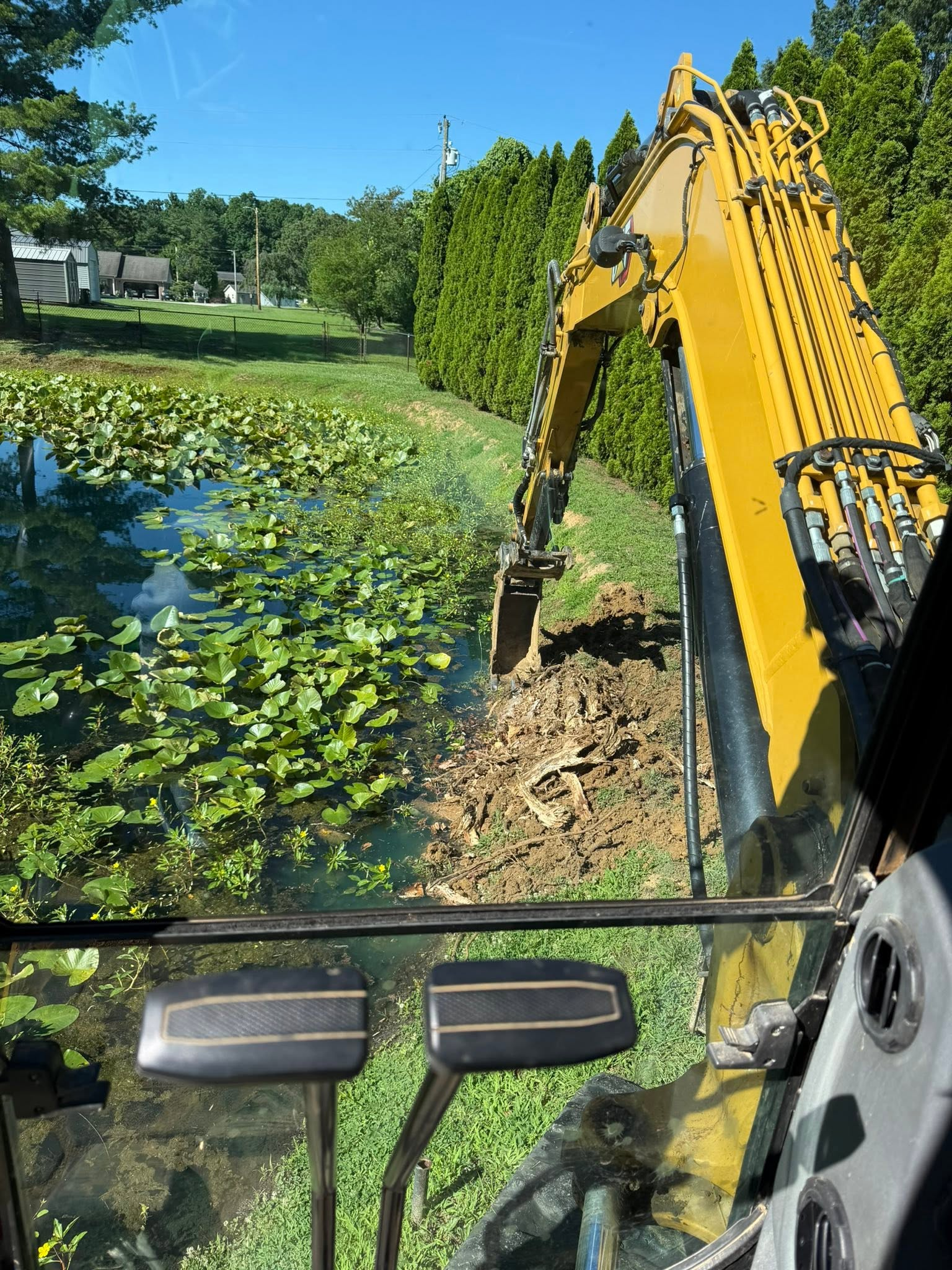
Pond Excavation Shaped to Your Property's Conditions
Pond Construction in Murray for residential acreage, farms, and commercial properties where a properly excavated pond fits defined land improvement goals
The difference between a pond that holds water and functions as intended versus one that seeps, slumps, or fills with silt within the first few years almost always comes down to what happened before and during excavation. Gingles Excavating approaches pond construction by starting with a site review that examines soil composition, topographic drainage patterns, and the natural low points on the property—details that determine where a pond can realistically be positioned and what excavation depth is needed to reach suitable material. Skipping this step and digging based on appearance alone is the most common reason ponds underperform or require expensive correction work shortly after completion.
Pond construction involves excavating to a planned depth and shape, developing stable banks that resist erosion during rain events, and managing the soil removed during digging—some of which may be usable for berms, fill, or other site improvements on the same property. Bank slope is a critical design decision: banks that are too steep erode and slump after the first wet season, while properly graded slopes stabilize naturally over time as vegetation establishes. The finished shape of the pond basin also affects how sediment settles, how water stratifies, and how effectively the pond serves its purpose whether that's irrigation storage, livestock watering, wildlife habitat, or aesthetic value on residential land.
Schedule a site review to walk the property and discuss pond placement, sizing, and what the excavation process involves for your specific land conditions.
What Pond Construction Actually Accomplishes
Once excavation begins, the work involves more than digging a hole—it requires shaping the basin to consistent depth, managing soil moisture during the cut to maintain clean bank profiles, and coordinating spoil material placement so it doesn't create drainage problems elsewhere on the property. In Murray and the surrounding area, the presence of clay-rich subsoil at depth can work in favor of pond retention, but that determination has to be made based on what's actually encountered during excavation rather than assumed in advance.
After construction, the visible result is a defined water feature with graded banks, established overflow or drainage provisions, and surrounding ground that drains toward the pond basin rather than pooling in unintended areas. Excavated material is redistributed or removed based on the site plan, leaving the surrounding land usable rather than covered in displaced soil piles.
Pond work frequently connects with land clearing when trees or brush occupy the planned construction area, and with erosion control grading along the banks and surrounding drainage path. These phases are most efficiently handled in sequence, and planning them together allows soil management decisions to serve multiple purposes across the full scope of the land improvement project.
What Property Owners Usually Ask About Pond Construction
Landowners in this region ask similar questions when evaluating whether a pond project is the right fit for their property and what the construction process involves from start to finish.
How is the right pond location identified on my property?
Placement depends on natural drainage patterns, existing low points, soil composition at depth, and proximity to suitable overflow outlets—a site review examines all of these before any excavation plan is drawn up.
What happens to the soil excavated during pond construction?
Excavated material is typically used to build or reinforce berms around the pond perimeter, distributed across low areas of the property, or hauled off-site if the volume exceeds what the site can absorb usefully.
Why does bank slope affect pond performance?
Banks graded too steeply will erode and slide after heavy rain, depositing sediment into the basin and reducing depth over time, while properly sloped banks stabilize and can support ground cover that holds the soil in place long-term.
When is the best time to schedule pond excavation in Murray?
Late summer and fall are generally favorable because drier soil conditions make excavation cleaner and bank formation more stable than working in saturated spring ground.
What factors affect how deep a pond needs to be excavated?
Intended use, surface area, local evaporation rates, and whether clay is present at a depth sufficient for natural retention all influence how deep the basin needs to go to maintain reliable water levels through dry seasons.
Gingles Excavating can assess your property's specific conditions and outline a realistic pond plan before any commitment is made—call (270) 227-8956 to schedule a site visit and talk through your land improvement goals.