Stabilizing Ground Before Soil Movement Spreads
Erosion Control in Murray for disturbed sites, active slopes, and construction areas where runoff or grading activity creates soil movement risk
Graded slopes left without stabilization, construction sites with exposed subsoil, and properties where concentrated runoff has cut channels into the ground all share one characteristic: soil is moving somewhere it shouldn't be. Gingles Excavating addresses erosion concerns on residential and commercial sites across Murray by applying site-specific measures tied to grading, drainage planning, and surface stabilization rather than one-size solutions applied regardless of conditions. The appropriate response to erosion depends on what's causing the movement, where the runoff is concentrated, and what the disturbed area looks like after excavation or grading activity is complete.
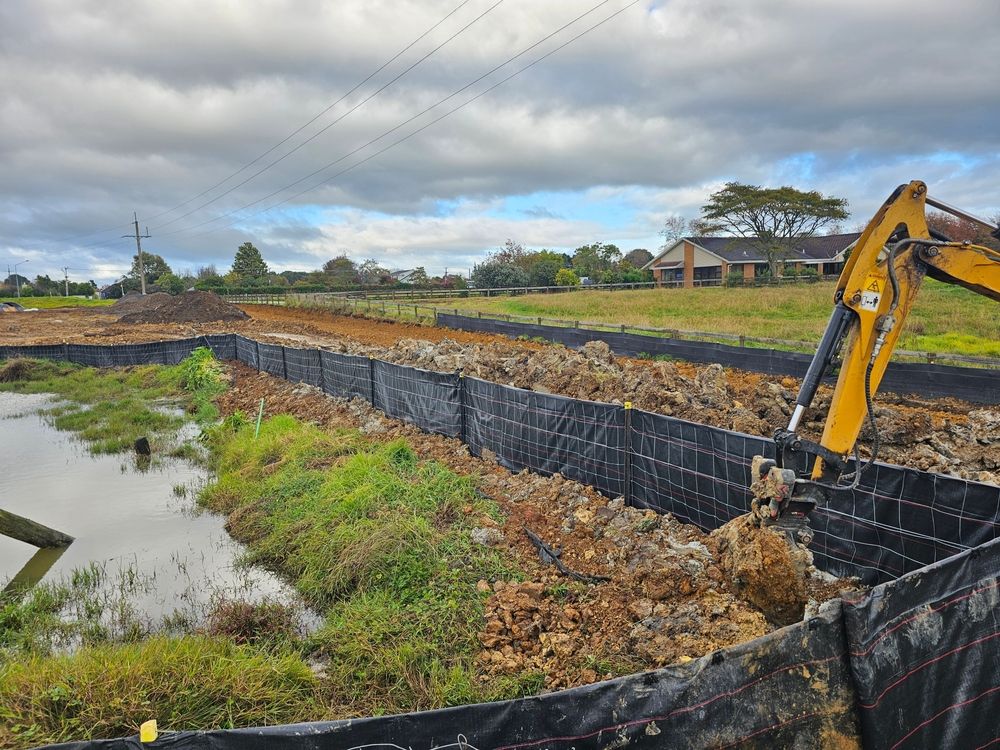
In Murray and the surrounding region, heavy seasonal rainfall events combined with the area's natural topography mean that disturbed sites without proper drainage planning can lose significant topsoil quickly. Erosion control work focuses on interrupting the path runoff takes across a site—through grading adjustments that reduce slope length and velocity, placement of stabilization measures on exposed areas, and drainage features like culverts or diversion channels that redirect water before it concentrates and cuts into bare soil.
Request a site evaluation from Gingles Excavating to identify where soil movement is occurring and what measures apply to your specific property conditions.
What Proper Erosion Control Requires
Effective erosion control begins with understanding where water enters the site, how it moves across disturbed or graded areas, and where it exits. That analysis drives decisions about what measures to install and in what sequence. Culvert installation, for example, addresses cases where runoff crosses a driveway or property edge without a controlled outlet—unmanaged crossings erode the embankment on the outlet side over repeated storm events. Pond construction and site grading work connect directly to erosion control by capturing and routing water through managed channels rather than allowing it to sheet across exposed ground.
After erosion control measures are installed, you'll notice that areas that previously showed rilling—those small parallel channels that form after each rain—stop developing new cuts. Graded slopes hold their shape between storm events rather than slumping or washing toward the toe. On construction sites, sediment that was previously tracking off-site stops accumulating at the property edge or in adjacent drainage features.
Erosion control is not a single task but a set of decisions made across the life of a project. Measures installed during active construction address immediate soil exposure, while final stabilization after grading is complete focuses on establishing long-term ground cover and proper drainage to prevent future movement. Gingles Excavating coordinates erosion control work alongside excavation, grading, and pond or culvert projects so stabilization is addressed as part of the overall site scope rather than added as an afterthought.
What Property Owners Usually Ask
Erosion questions often come up after a rainfall event reveals a problem that wasn't obvious before. The following answers address what property owners in Murray most commonly want to understand before requesting an evaluation.
What causes erosion to start on a previously stable slope?
Slopes that have been regraded, stripped of vegetation, or exposed during construction lose the root structure that held soil particles in place, making them vulnerable to surface runoff that carries loosened material downhill with each rain event.
How is the right erosion control measure selected for a specific site?
Site conditions—including slope length, soil type, runoff volume, and proximity to drainage features—determine which combination of grading adjustments, drainage installations, or surface stabilization approaches will address the specific movement pattern present.
Why does culvert sizing matter for erosion prevention?
An undersized culvert backs up water during heavy rainfall, which overtops the installation point and causes erosion on the downhill embankment; proper sizing is based on the drainage area the culvert must handle under storm conditions typical for Murray.
When should erosion control be installed on a construction site?
Stabilization measures should be in place before the first significant rainfall following grading or excavation—waiting until erosion is visible means topsoil and sediment have already moved off-site.
How does pond construction relate to erosion control on larger properties?
A properly graded and positioned pond captures runoff from upslope areas and gives water a managed outlet, which reduces the sheet flow velocity across open ground that drives surface erosion on rural and agricultural properties.
Gingles Excavating evaluates each site individually before recommending a scope of work—connect with the team to schedule a property walkthrough and discuss what erosion control measures fit your current site conditions.