
Built for Sites That Require Onsite Wastewater
Septic Installation in Murray for residential and commercial properties where public sewer access is unavailable or impractical
Gingles Excavating handles septic installation for residential and commercial properties across Murray that require a fully onsite wastewater system. Property owners who have no access to municipal sewer infrastructure—or whose site conditions make connection impractical—depend on a properly designed and installed septic system to manage all wastewater output. Each project starts with the approved system design, site-specific soil data, and applicable permits, because no two installations proceed identically.
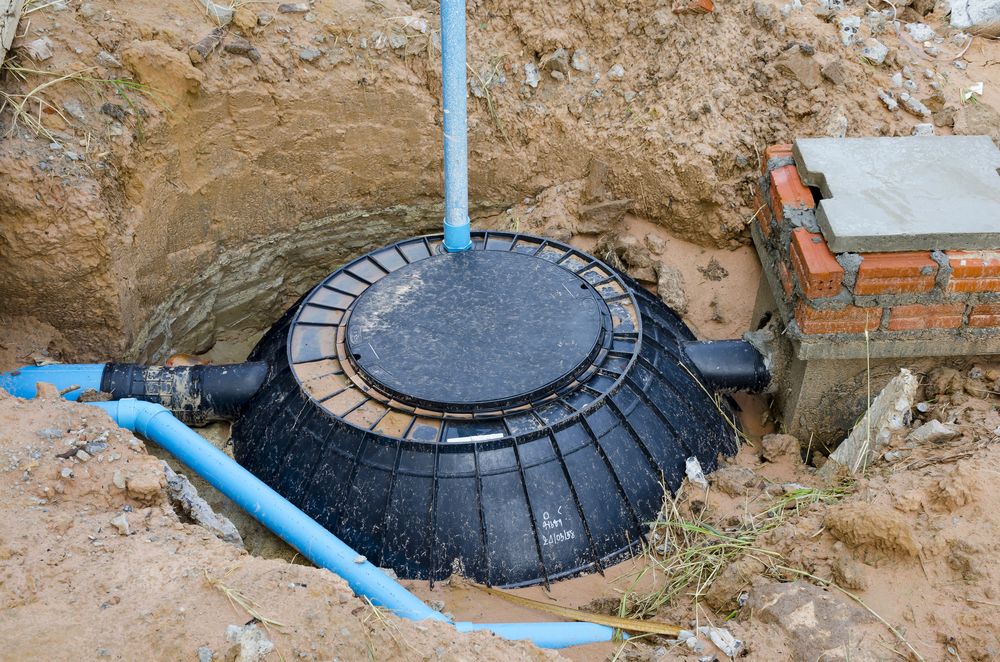
Septic installation involves substantially more excavation work than most property owners anticipate. Preparing a site for a tank, distribution lines, and a drain field requires removing and managing significant volumes of soil, grading to correct elevations, and placing each component within the tolerances established by the approved plan. In western Kentucky, clay-heavy soils common to this region affect percolation rates and can influence the size and configuration of the drain field required under state and local permitting standards.
Discuss your property layout and permit status with Gingles Excavating to request a project estimate based on your specific site conditions.
How Septic Excavation Supports System Performance
The excavation phase of septic installation directly affects how the system functions over time. Tank placement must account for access requirements and depth tolerances, while trench work for distribution lines must follow precise grades to allow gravity-fed flow without creating low spots where solids accumulate. Every cut made during excavation is coordinated against the approved system design rather than adjusted in the field based on convenience.
Once installation is complete, you'll notice that disturbed areas are graded and brought back to a stable finish grade, with no low spots or depressions left around the tank lid or drain field perimeter. The system becomes invisible in the landscape once final grading is done, with access points clearly marked and accessible for future service without requiring additional excavation.
Projects vary depending on whether the system uses a conventional gravity-fed design, a pressure-dosed configuration, or an alternative system type required by site conditions. Properties with limited usable area, steep grade changes, or soil classifications that restrict standard drain field sizing require careful coordination between excavation scope and the system design that received permit approval.
Common Questions About Septic Installation
Property owners in Murray frequently have questions about what the installation process involves and what's required before work begins. The answers below address the most common points that come up during planning conversations.
What permits are required before septic installation begins?
Local health department approval and a site evaluation are typically required before any excavation begins, and the approved permit establishes the system type, tank size, and drain field specifications your installation must follow.
How does soil type affect the drain field design?
Soil percolation testing determines how quickly effluent moves through the ground, and in Murray where clay-dense soils are common, results often require larger drain field footprints or alternative system configurations to meet regulatory requirements.
What happens to the excavated soil during installation?
Soil removed during tank and trench excavation is staged on-site and used for backfill and final grading once components are placed, with any excess material managed based on site conditions and access constraints.
Why does the excavation depth matter for tank placement?
Tank depth affects both the gravity flow from the structure's outlet pipe and the accessibility of the tank lid for future pumping, so placement decisions are made against the approved plan rather than estimated in the field.
When is the best time to schedule septic installation?
Scheduling during dry soil conditions reduces the risk of trench wall instability and allows for cleaner grading work, though Gingles Excavating evaluates site conditions before mobilizing to confirm the ground is workable.
Gingles Excavating coordinates septic installation around the approved system design, site conditions, and permit requirements specific to your property—request an on-site evaluation to review what your project will involve before work begins.