Clearing Space for What Comes Next
Demolition in Murray for structures and sites that need to be cleared before redevelopment or replacement work begins
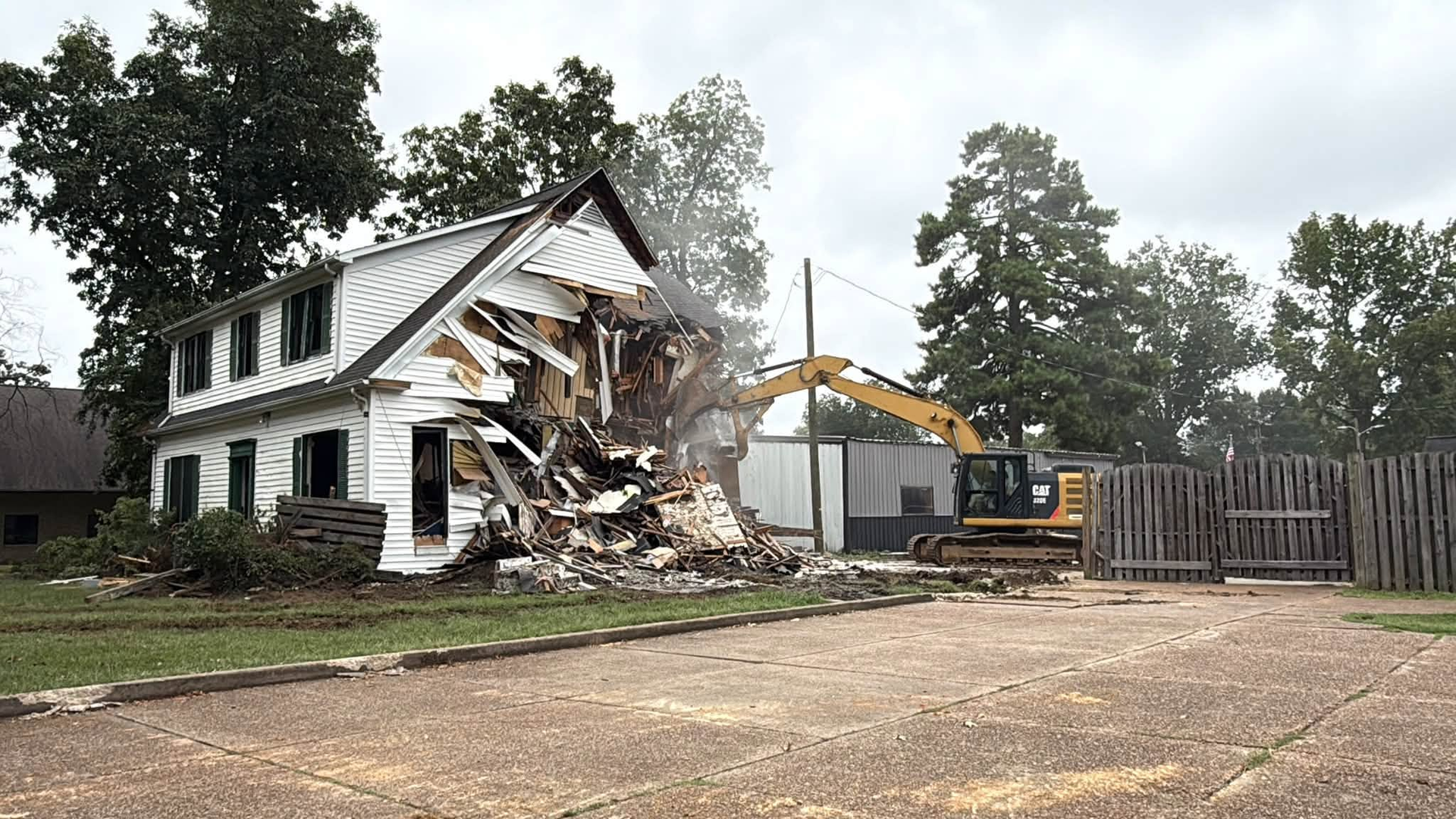
Gingles Excavating handles residential and commercial demolition for property owners who need a structure removed, a site cleared, or an area prepared before the next phase of construction can begin. Whether the project involves taking down an aging outbuilding, clearing a commercial structure, or removing the remnants of a damaged building, the work requires more than swinging equipment at a wall—it involves sequenced teardown that controls how materials fall, where debris moves, and what condition the site is in when demolition finishes. That level of organization determines how smoothly the work that follows can begin.
Demolition on residential properties often involves structures close to fences, utility lines, or existing buildings that need to stay intact. Commercial sites present a different set of constraints, including larger footprints, more material volume, and stricter requirements around how debris is handled and removed. In both cases, equipment selection and operator experience directly affect how precisely teardown proceeds and how little remediation the site needs afterward. A disorganized demolition can leave buried debris, uneven ground, or compromised soil that creates complications at every stage that follows.
Request an estimate for your demolition project to review the scope of work and what site preparation steps follow removal.
What Proper Demolition Requires
Proper demolition begins with assessing what needs to come down, what needs to stay, and in what order the work should proceed. That assessment shapes equipment choices, staging, and how debris is handled throughout the job. On sites where excavation and grading will follow—which is common when clearing for new construction—the demolition phase needs to leave the ground in a condition that supports that next step without requiring extra corrective work.
Once demolition is complete, you'll notice a site that's been cleared of structural material and organized for what follows rather than left with piled rubble or scattered debris. Foundation remnants, concrete slabs, and embedded materials require specific handling depending on whether they're being removed entirely or whether portions will remain as part of the new construction plan—those decisions are made before equipment rolls onto the property.
One of the advantages of working with Gingles Excavating for demolition is the direct continuity into site preparation and excavation when those services are needed. Rather than coordinating handoffs between separate contractors, the same team that clears the structure can move into grading, excavation, or drainage work on the same property. That overlap reduces scheduling gaps and keeps the project moving without redundant mobilization costs.
Common Questions About Demolition Projects
Property owners in the Murray area often have practical questions before committing to demolition work—particularly around what the process involves and how it connects to construction that follows.
What structures can be demolished through this service?
Residential buildings, outbuildings, sheds, barns, garages, and commercial structures are all within scope, and the approach is tailored based on size, materials, and proximity to structures that need to remain.
How is debris handled after the structure comes down?
Demolished material is broken down and removed from the site as part of the process, leaving the ground clear rather than requiring a separate haul-away arrangement.
What happens to the site after demolition is finished?
The site is left in a condition suitable for the next phase of work, whether that's grading, excavation, or new construction—the final state is discussed and agreed on before work begins.
Why does equipment selection matter for demolition work?
Different machines handle teardown differently in terms of reach, precision, and how much control the operator has over material movement—in tight residential settings around Murray, that precision directly affects what stays undamaged.
When should demolition be scheduled relative to new construction?
Demolition should be completed and the site cleared before construction crews mobilize, since starting construction on a partially cleared or uneven site creates avoidable complications for foundation and framing work.
Gingles Excavating works with property owners to plan demolition that accounts for what the site needs to look like when the next contractor arrives. Contact (270) 227-8956 to request a detailed estimate based on your specific structure and site conditions.