
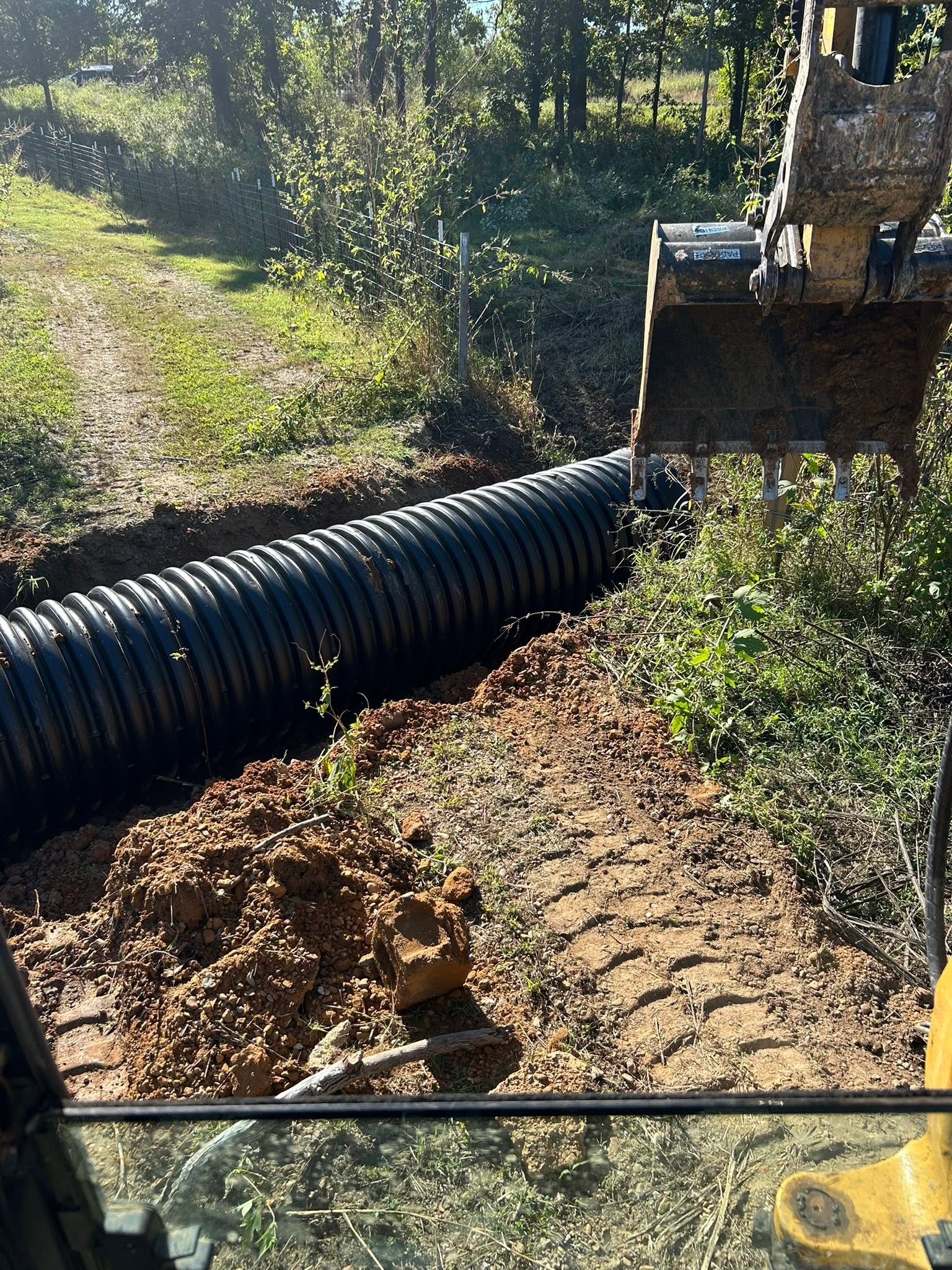
Water Crossings Built for Lasting Access
Culvert Installation in Murray for driveways, entrances, and drainage crossings where water erodes or blocks usable access
Gingles Excavating handles culvert installation for residential and commercial properties where a defined water path beneath a driveway or entrance is the only practical way to maintain access without ongoing erosion damage. Unpaved crossings that lack a properly sized culvert tend to wash out repeatedly, leaving behind soft spots, ruts, and unstable base material that compounds with every rain event. Sizing, placement depth, and the quality of material rebuilt around the pipe are what determine whether the crossing holds up under vehicle traffic or fails within the first season.
Installation begins with evaluating the natural drainage path at the crossing point—identifying how water moves across the site, what volume it carries during heavy rain, and what pipe diameter will handle that flow without backing up or scouring the outlet end. The crossing is then excavated to the appropriate depth, the culvert is set at a slight grade to encourage self-cleaning flow, and the surrounding base is rebuilt in compacted layers before the finished surface goes back on top. Skipping the compaction step or undersizing the pipe are the two most common reasons culverts fail prematurely, and both are avoidable with a proper site evaluation before work begins.
Request an on-site estimate to review the crossing location and determine the right pipe size and base preparation for your property.
How Culvert Placement Controls Drainage and Protects the Base
The culvert itself is only part of the system—the material packed around and above it determines how load is distributed when vehicles cross. Aggregate base is placed in lifts on both sides of the pipe and compacted before each successive layer is added, which prevents the pipe from shifting or flattening under repeated traffic. In western Kentucky's clay-heavy soils, proper drainage at the outlet end is especially important because clay retains moisture and can undermine a crossing from the downhill side if water pools and saturates the surrounding base.
Once the installation is complete, you'll notice the crossing holds its shape after rain rather than developing the soft center or rutted edges that signal a failing or absent culvert. The surface drains away from the roadbed instead of pooling, and the driveway base stays firm through wet seasons rather than requiring repeated regrading.
Culvert work often coordinates directly with driveway construction and erosion control grading, since these projects share the same excavation and base-building steps. The approach varies depending on whether the crossing serves a low-traffic residential entrance or a high-load commercial access point, which affects both pipe specification and base depth requirements.
Common Questions About Culvert Installation
Property owners in Murray and the surrounding region frequently ask about sizing, timing, and what the installation actually involves before committing to the project.
What determines the right culvert pipe size for my driveway?
Pipe diameter is based on the drainage area upstream and the volume of water that flows through the crossing during a significant rain event—undersizing causes water to back up and erode around the pipe ends, while significant oversizing can lead to sediment buildup inside the pipe over time.
How deep does the culvert need to be set?
The pipe needs enough cover above it to distribute vehicle load without cracking, which in most residential driveway situations means a minimum of twelve inches of compacted base material above the crown of the pipe.
When is the best time to schedule culvert installation?
Installation can proceed in most weather conditions, but starting before the wet season means the crossing is functional and stable before heavy rains test it.
Why does the base material around the culvert matter so much?
Poorly compacted fill around the pipe creates voids that collapse under traffic, which shifts the pipe out of grade and defeats the drainage function entirely.
How does Murray's soil type affect culvert installation?
The clay content common in this part of Kentucky slows drainage at outlet ends, so outlet aprons or riprap protection are often added to prevent scour where water exits the pipe.
Gingles Excavating can walk through the specific conditions at your crossing and outline what the installation involves before any work begins—call (270) 227-8956 to arrange a site visit and discuss your driveway or drainage crossing needs.