
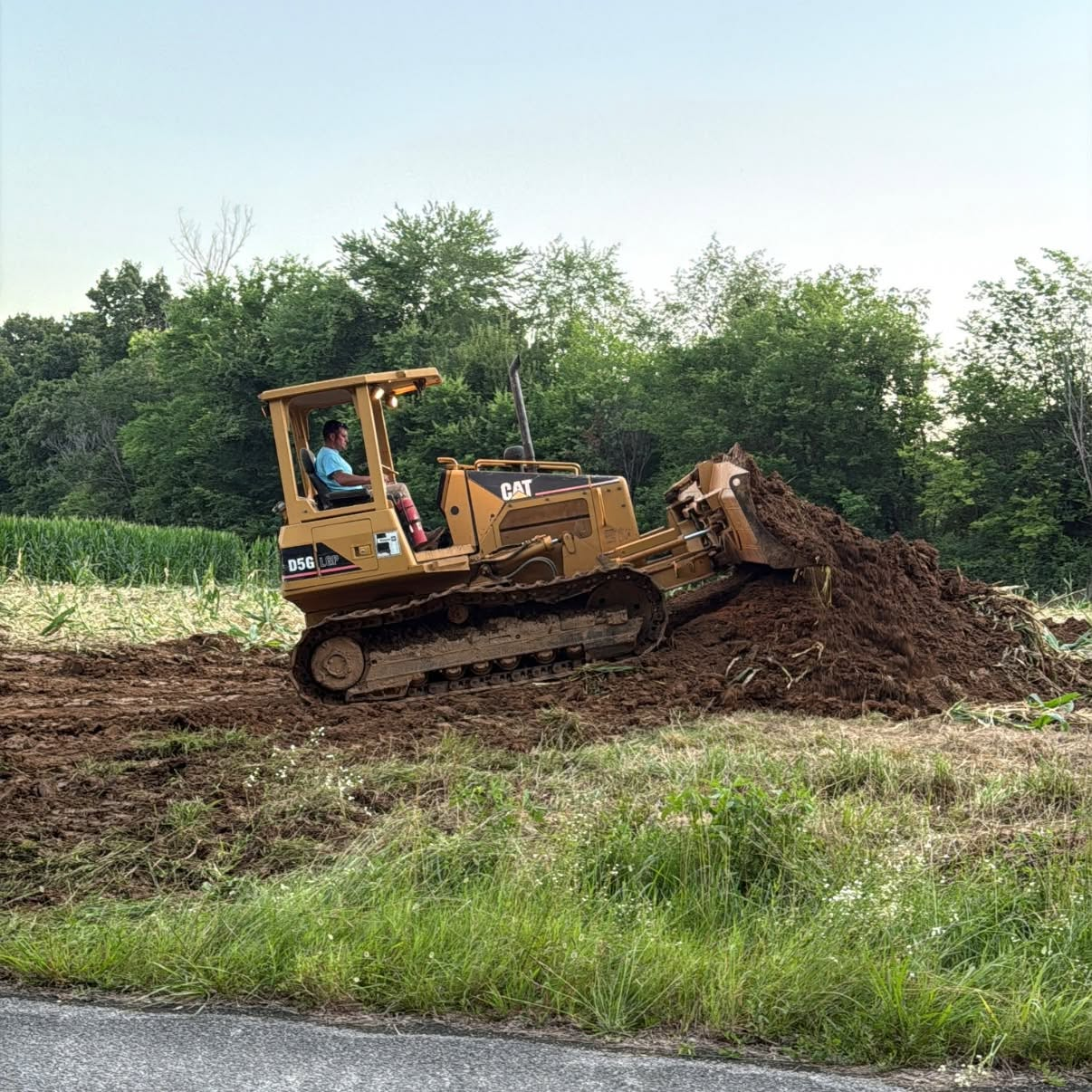
Groundwork That Construction Projects Actually Depend On
Site Preparation in Murray for residential and commercial properties where construction cannot begin on ungraded, uncleared, or improperly prepared ground
A flat-looking piece of ground is not necessarily a construction-ready piece of ground. Buried root systems, poor drainage patterns, inconsistent soil bearing capacity, and surface irregularities that aren't visible to the eye can all create serious complications once footings are dug and building begins. Gingles Excavating provides residential and commercial site preparation in Murray that addresses those conditions before construction starts, rather than after they cause problems. With more than 20 years of hands-on excavation experience, the work goes beyond surface grading to include the subsurface decisions that determine long-term stability.
Site preparation typically involves clearing existing vegetation and debris, excavating to the required depth, shaping the ground to direct water away from structures and paved surfaces, and compacting soil to support the loads that construction will place on it. The specific sequence depends on the project—a residential home site has different requirements than a commercial building pad or a driveway corridor. Soil type, slope, drainage patterns, and utility locations all factor into how the work is staged and what equipment is used throughout the process. In the Murray area, clay-heavy soils in particular require careful attention to compaction and drainage during site prep, since poorly managed soil movement during this phase tends to show up as settling or erosion problems after construction is complete.
Arrange a site evaluation and estimate to identify what your specific property requires before construction mobilizes.
How Site Preparation Addresses Construction Readiness
Site preparation is a decision-dense phase of work. Grading decisions made during this phase determine where water flows during and after construction, and those drainage paths need to be established deliberately—not left to whatever slope happens to result from moving soil around. Cuts and fills need to be balanced when possible to limit material hauled in or out, and areas that receive fill need to be compacted in lifts to prevent differential settling beneath slabs, foundations, or paved surfaces.
When preparation is complete, the observable difference is a site that's level or appropriately sloped for drainage, free of obstructions at and below grade, and in a condition where foundation work or paving can begin without remediation. You'll also notice clearly defined areas where utilities are routed and where drainage structures are positioned—those layouts are established during site prep rather than worked around later. Gingles Excavating documents the prepared condition so the next phase of construction begins with a clear picture of what the ground looks like below the surface.
Site preparation scope varies based on whether the project is a new residential build, a commercial pad, a driveway corridor, or an area being converted from raw land to usable ground. Clearing, grubbing, rough grading, and fine grading are often sequential steps rather than a single pass—the approach is scoped based on what the finished construction requires, not a one-size process applied regardless of conditions.
What Property Owners Usually Ask About Site Prep
Questions about site preparation often center on sequencing—specifically, what needs to happen before construction begins and how long the preparation phase takes relative to the overall project timeline.
How is a site evaluated before preparation begins?
A site walkthrough identifies existing drainage patterns, vegetation density, soil conditions at the surface, and any access constraints that affect equipment staging—that information drives the scope and cost estimate.
What does proper grading during site prep actually accomplish?
Grading directs surface water away from building pads and paved areas so that drainage is controlled from the start rather than corrected after structures are in place.
Why does compaction matter during site preparation?
Soil compacted in controlled lifts supports construction loads without settling—skipping or rushing compaction is one of the most common causes of foundation movement and pavement cracking after construction finishes.
How does Murray's soil composition affect site preparation?
The clay-based soils common in this part of western Kentucky expand and contract with moisture changes, which makes proper drainage establishment and compaction more consequential here than in regions with sandy or loam-dominant soils.
What other services connect to site preparation on larger projects?
Land clearing, demolition, culvert installation, and driveway construction frequently overlap with site prep—working with one contractor across those phases reduces coordination problems and keeps the site moving efficiently.
Gingles Excavating brings more than 20 years of excavation experience to site preparation projects across Murray and the surrounding region. Call (270) 227-8956 to request a site evaluation and discuss what your property needs before construction begins.